
The Tiles of Hearst Castle
Some places feel less like destinations and more like pilgrimages if you care about materials. Hearst Castle was one of those for us. Yes, it’s iconic. Yes, it’s excessive. But once you get past the spectacle, what really holds your attention is how deliberately tile is used—everywhere, at every scale, and never as an afterthought.
When William Randolph Hearst asked architect Julia Morgan to begin work on the estate in 1919, the vision was ambitious from the start. What eventually emerged was a nearly 70,000-square-foot compound that blended architecture, art, and global collecting into something singular. Tile became one of the primary ways that vision was stitched together. It connects spaces, anchors transitions, and quietly does a lot of structural design work while looking beautiful.
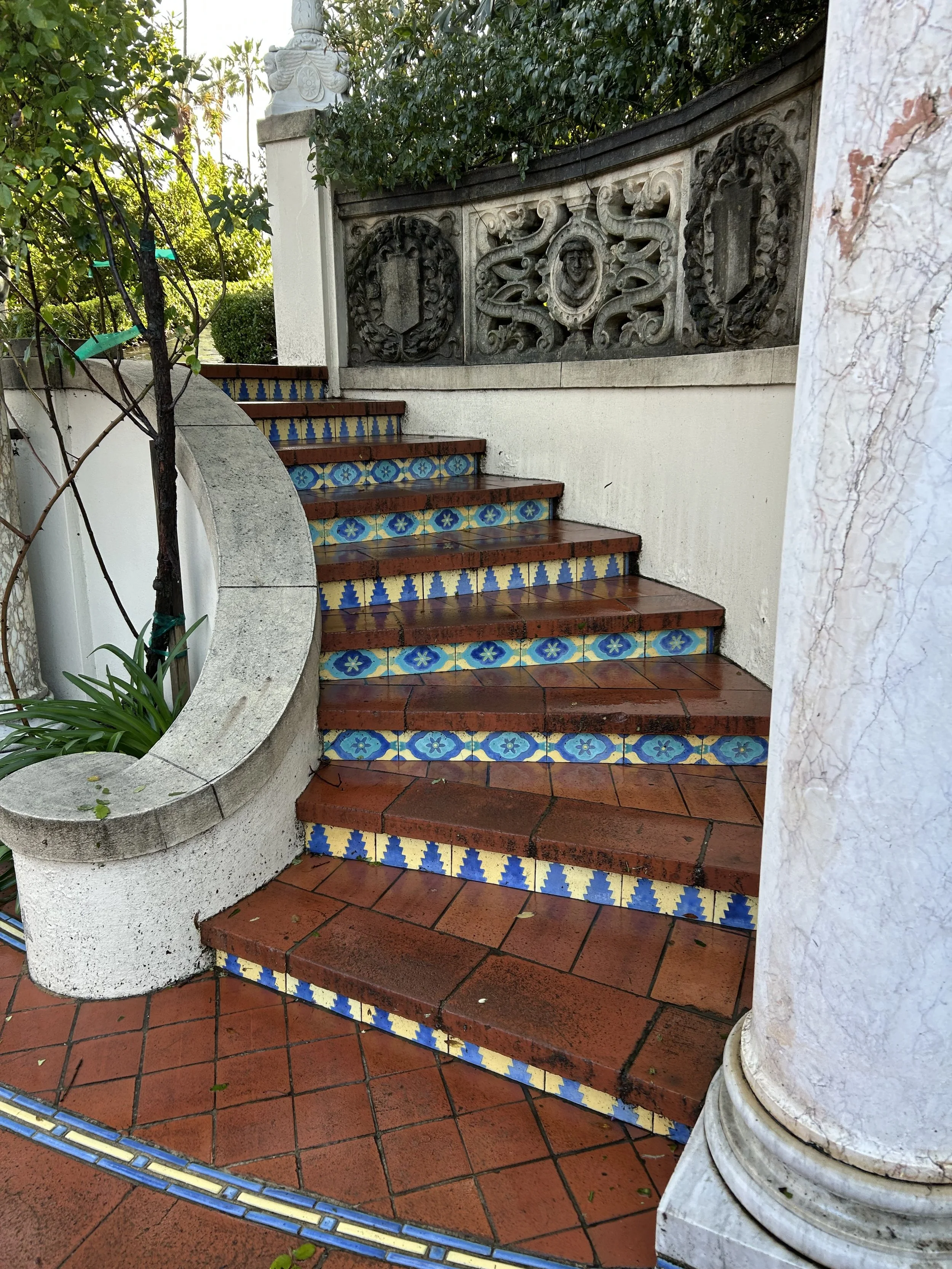
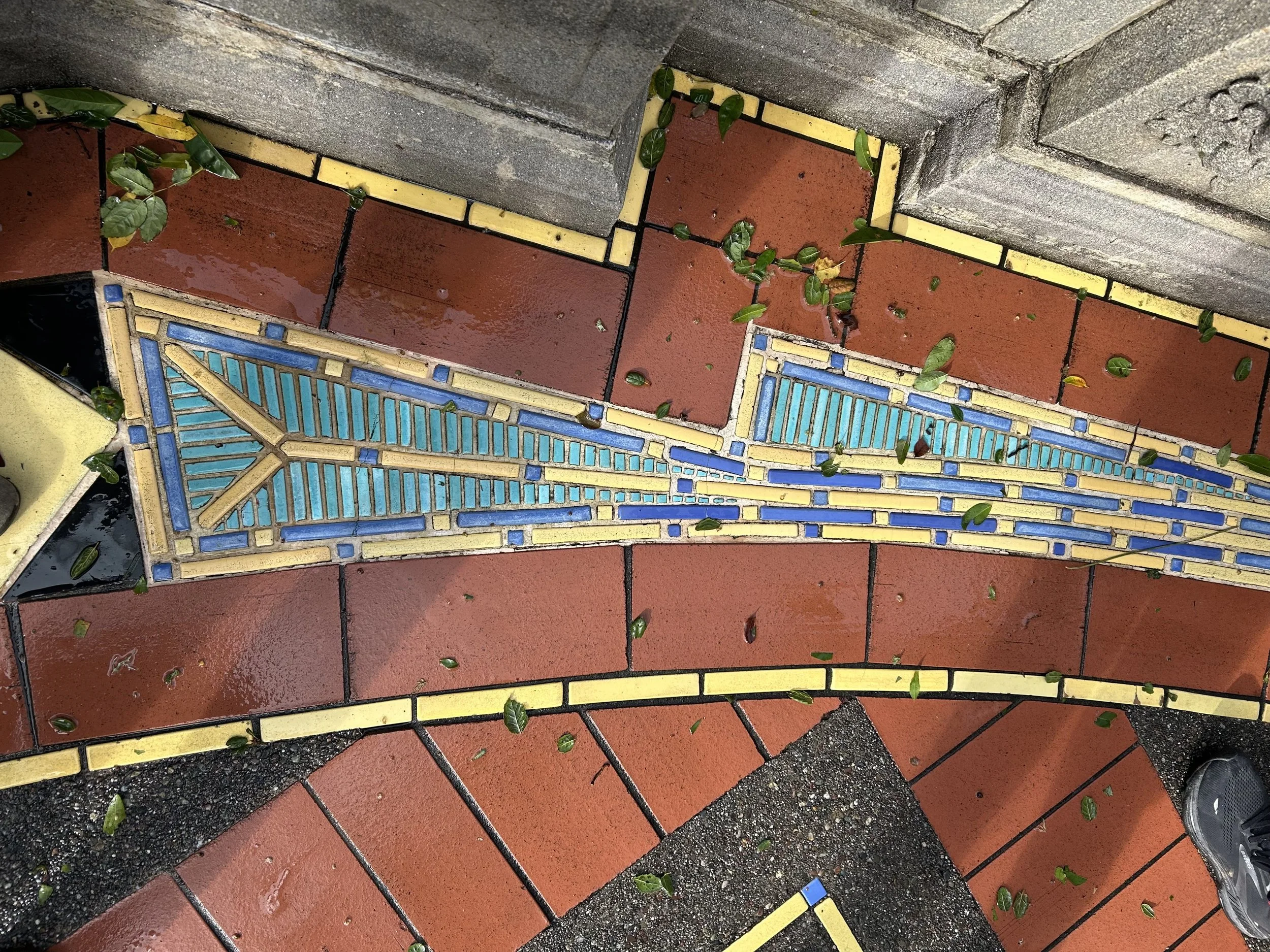
Much of the exterior tile came from California Faience, founded by Chauncey Thomas, and it shows up in places that might otherwise be overlooked: stair risers, walkways, thresholds. Some of our favorite moments weren’t grand panels at all, but small vignettes embedded into larger field tile layouts. They’re imperfect, charming, and incredibly instructive. Broken liners, chipped edges, odd remnants—rather than being hidden or discarded, they’re put to work creatively. As people who salvage tile for a living, this felt especially affirming. These aren’t mistakes or compromises, but design decisions.
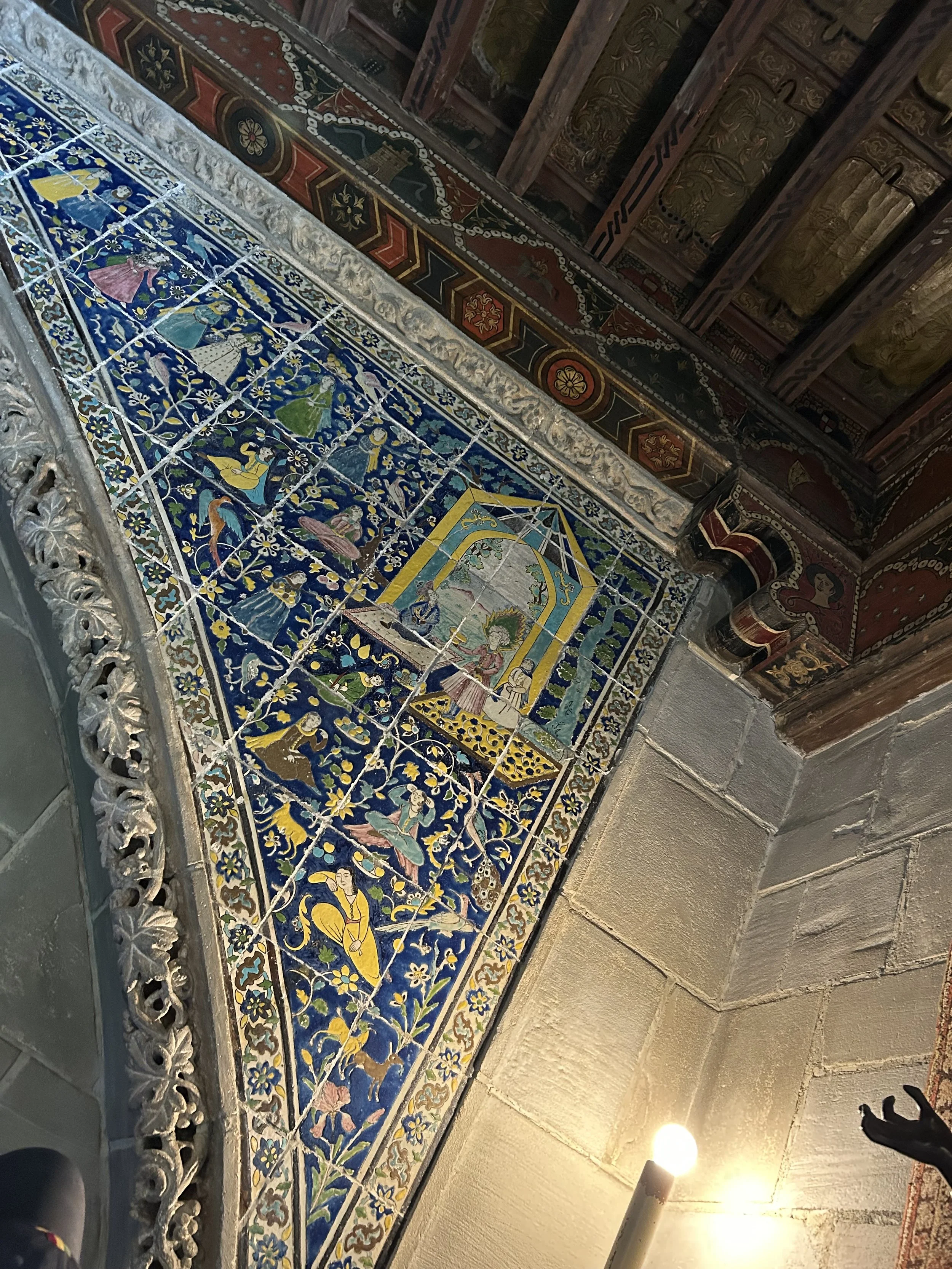
Hearst’s collecting extended well beyond California. On buying trips across Europe, he acquired architectural fragments and tile spanning centuries. Roman-era mosaics appear near entryways, seamlessly integrating into a 20th-century estate. Persian tiles line the billiards room, dense with color, figures, and pattern.
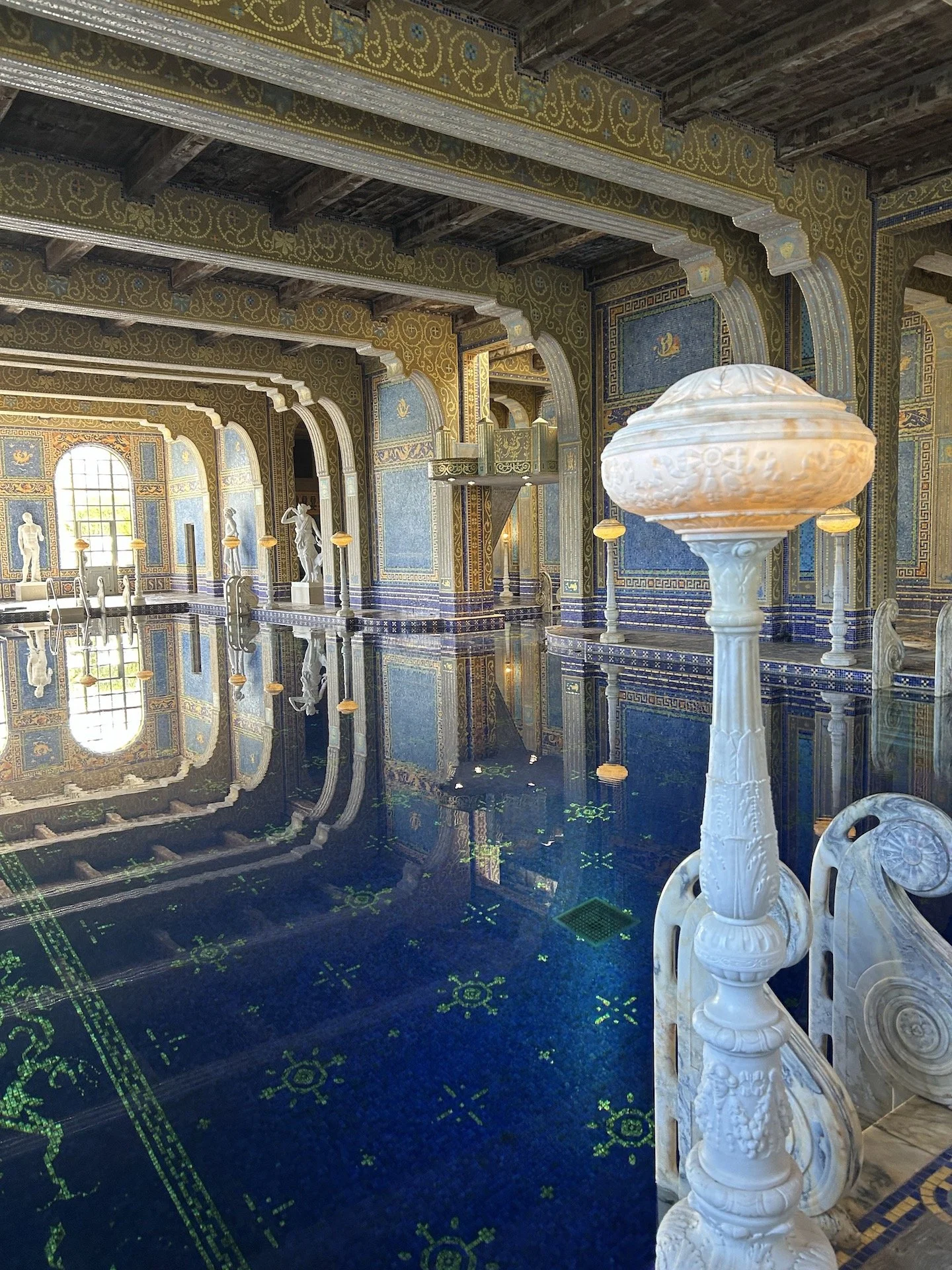
And then there’s the Roman Pool. Covered floor to ceiling in one-inch square smalti glass tiles, including rounded sills that still feel impossibly smooth, it’s a masterclass in restraint and excess existing at the same time. Many of the tiles contain 22–24k gold, glowing subtly beneath the surface. Even the pool interior is tiled, with repeating motifs visible through the water.
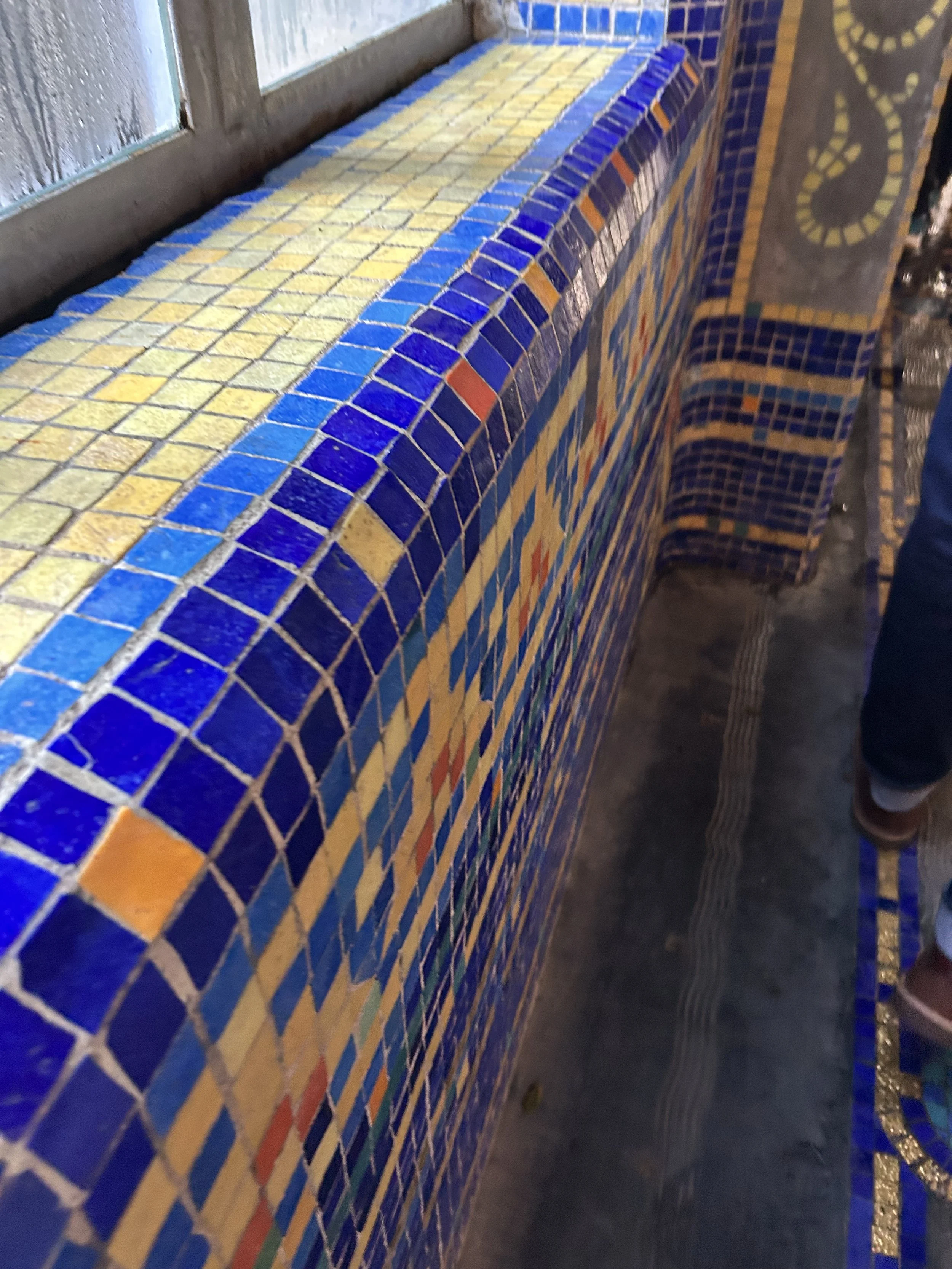
Walking through spaces like this always sharpens our own work. We salvage and sell historic tile because we believe these materials still belong in everyday life, not just estates or museums. We work with designers and homeowners who want character, depth, and history in their spaces, whether that means building a custom fireplace surround, designing a floor layout around imperfect remnants, or finding a way to use tiles that don’t present as “perfect.” Places like Hearst Castle reinforce that belief. Tile doesn’t need to be pristine to be powerful. In fact, it’s often better when it isn’t.
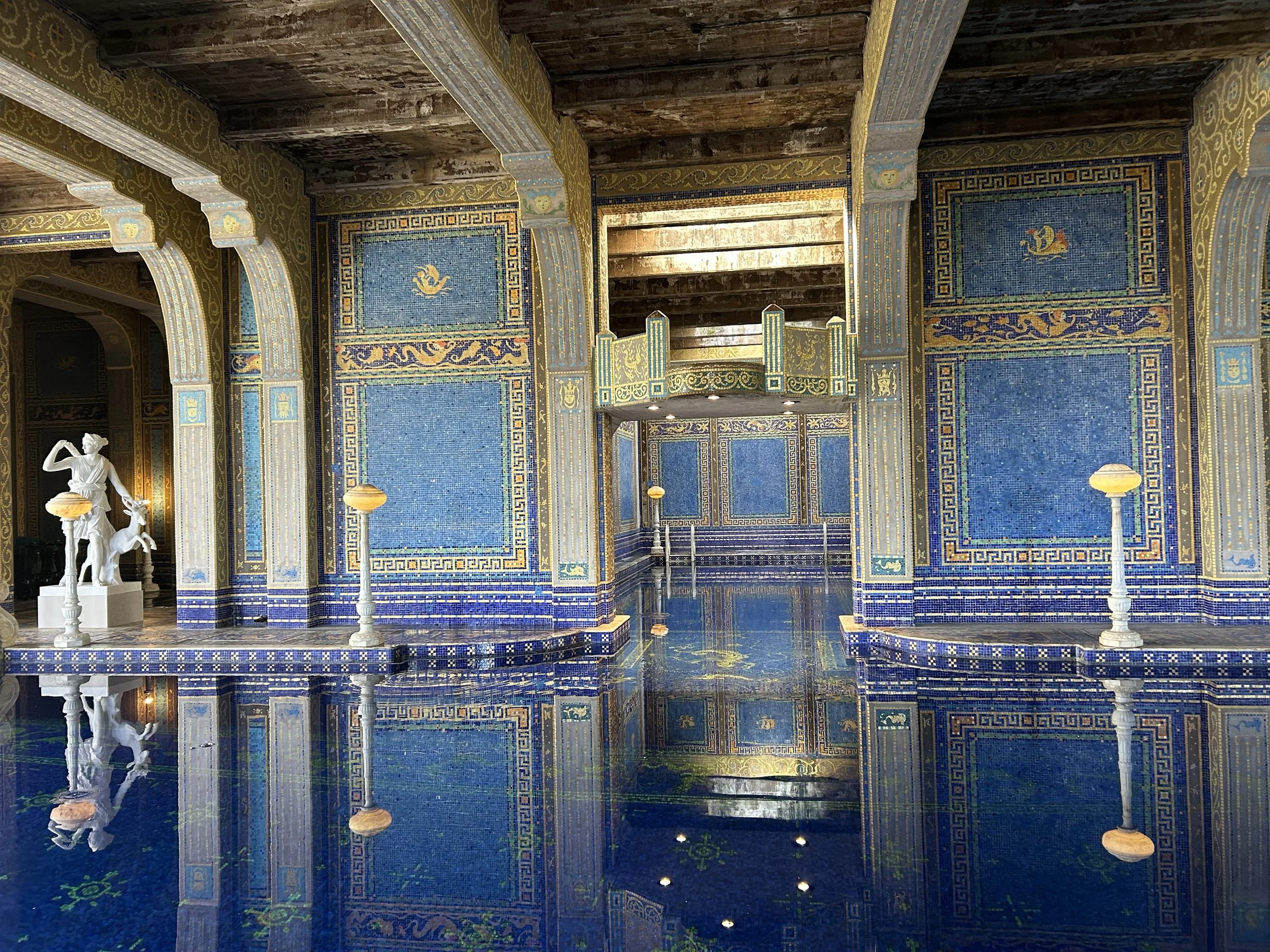
If we had to pick favorites, the smalti in the Roman Pool would be hard to beat, especially the Greek Key patterns repeating in the water’s reflection. But tile is everywhere at Hearst Castle, inviting a second glance where creativity rose above uniformity. Those are the details that translate most directly into the kinds of projects we help bring to life every day.